Repetitive questions
Customers repeatedly asked about products, availability, pricing, order next steps, and campaign details.
Case study
Customer inquiries were arriving through Facebook comments faster than staff could respond. I designed an image-aware, FAQ-backed automation workflow that could understand post context, protect against unsafe replies, and respond in the brand voice while keeping human review available for exceptions.
Overview
The client was spending significant time on repetitive manual responses that slowed operations and created inconsistencies. The solution turned incoming Facebook comments into a structured workflow for filtering, context gathering, AI-assisted response, escalation, and visibility.
The business problem
The issue was not just volume. Responses were inconsistent, follow-ups were missed, and staff were spending valuable time answering the same questions instead of moving qualified customers forward. The team also needed the system to understand the original post, not only the comment.
Customers repeatedly asked about products, availability, pricing, order next steps, and campaign details.
Different staff members answered similar questions differently, which created uneven customer experience.
Important comments could be buried during busy periods, especially when campaigns created sudden spikes.
Many customer questions depended on the product, promo, price, or image shown in the original post.
The workflow needed to handle comments across several pages without replying from the wrong account.
Spam, complaints, deleted comments, page-owned comments, and reactions needed to be filtered out.
Challenges
Solution
I designed a workflow that listens for Facebook comment events, ignores events that should not receive a reply, selects the right page identity, retrieves the original post context, analyzes the post image when needed, checks internal FAQ data, and generates a short brand-aligned response.
The important design choice was control: the system was not built to blindly answer everything. It classifies spam, bad comments, and customer complaints, then avoids or escalates cases where automation should not respond.
To make replies feel natural, the workflow waits briefly before responding and uses conversational Taglish brand guidelines rather than generic AI language.
System architecture
The architecture connects Facebook webhooks, page routing, post context, image analysis, FAQ knowledge, AI response generation, safety checks, and the final Facebook reply.
Business results
Technologies
The tools were selected around reliability, integration needs, and maintainability.
Gallery
These screenshots show the working automation: the n8n flow, Facebook reply behavior, FAQ grounding, safety logic, and the before/after process change.
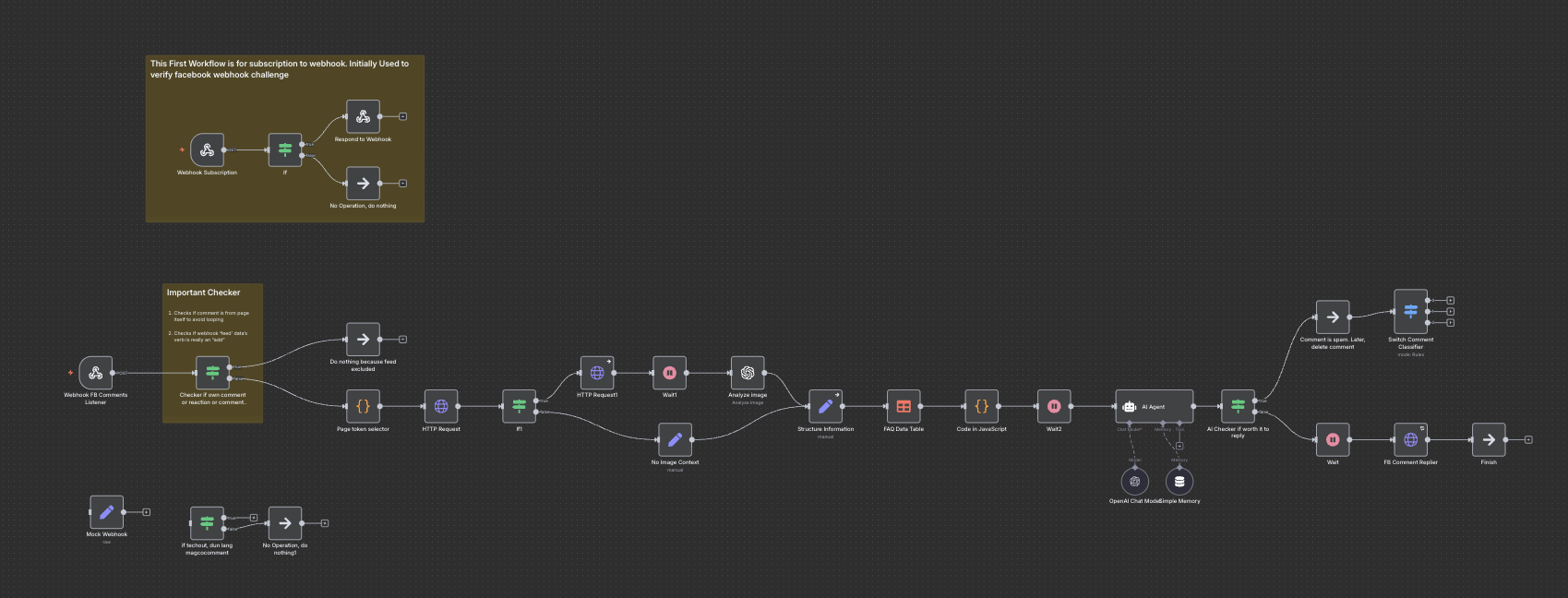
The workflow listens for comment events, filters unsafe cases, gathers post and image context, checks FAQ data, prepares the reply, and routes exceptions.
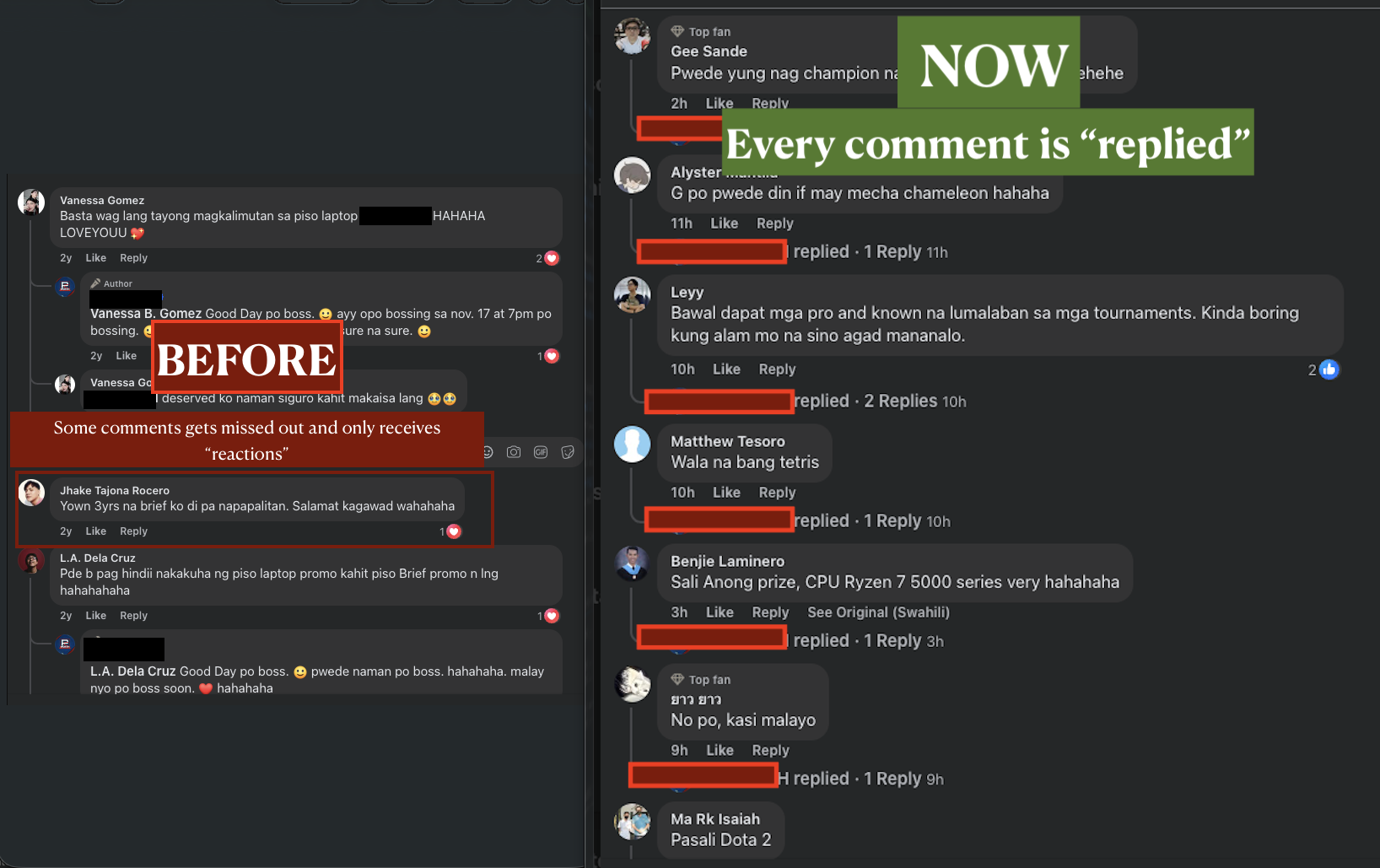
The process moved from manual comment monitoring and missed replies to a filtered AI-assisted response workflow.
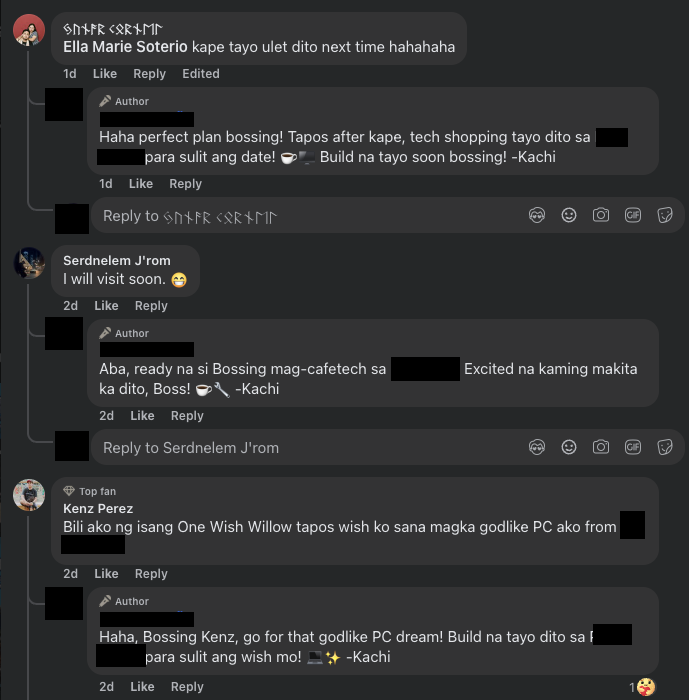
Replies stay conversational and brand-aligned while preserving a human review path for exceptions.
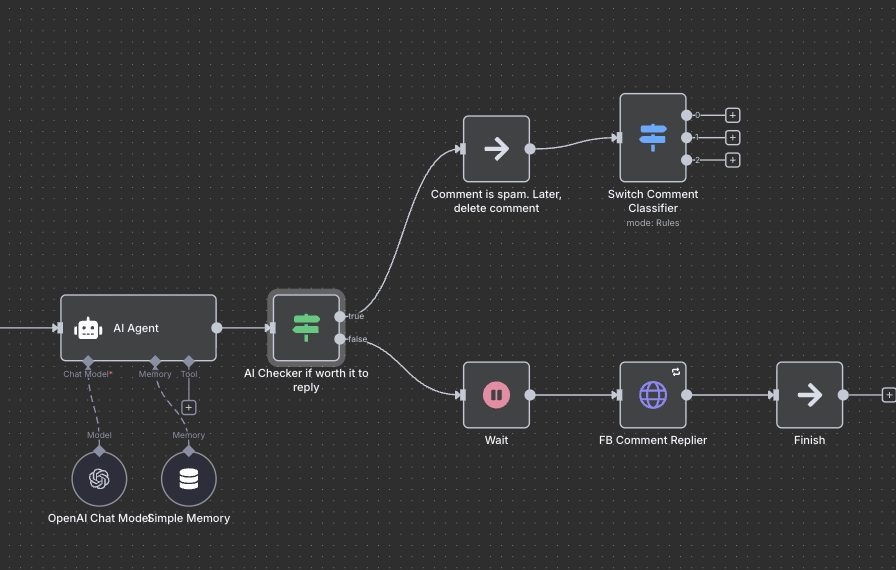
The system checks whether a comment is worth replying to, avoids unsafe cases, waits briefly, then sends the response or routes the exception.
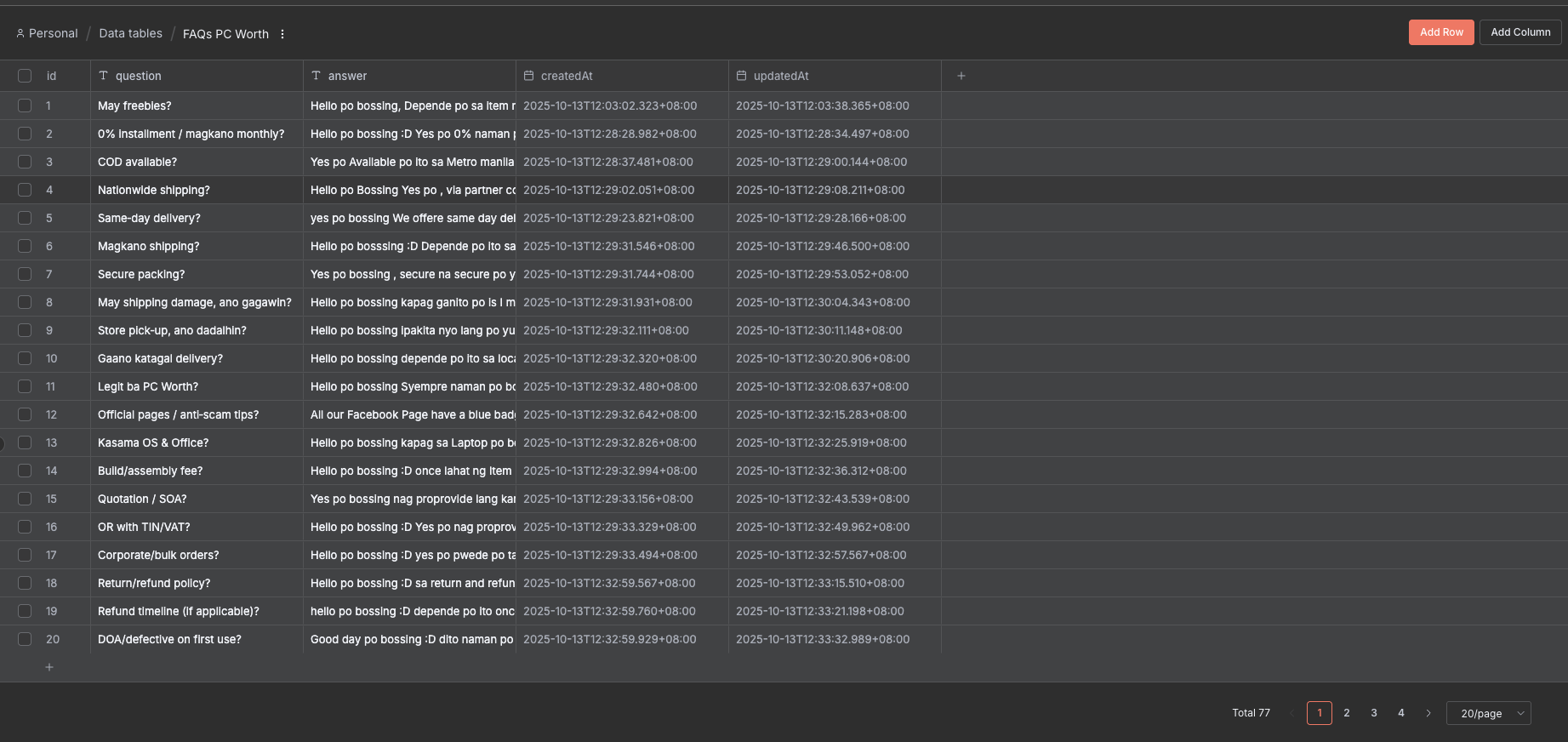
The automation uses structured FAQ data so common questions can be answered from approved business context instead of unsupported guesses.
Why this matters
The solution transformed a repetitive manual response process into a dependable, brand-aware system, allowing the team to focus on higher-value customer conversations instead of repeated operational tasks.
Book a free discovery call. We will identify whether automation can reduce repetitive work, improve visibility, and make the process easier for your team to run.
Book My Free Discovery Call