Manual data entry
Build specs had to be typed or cleaned up repeatedly before publishing.
Case study
PC build gallery content needed to be cleaned, checked, and published quickly without sacrificing quality. I built an AI-assisted workflow that improves gallery metadata, validates photos, removes invalid images, generates polished setup visuals, and prepares entries for publishing.
Overview
The client needed a faster way to prepare PC build gallery entries while protecting accuracy, brand safety, image quality, and consistency.
The business problem
Staff had to clean up titles, descriptions, build tiers, tags, keywords, uploaded photos, and publishing details before each gallery entry could go live.
Build specs had to be typed or cleaned up repeatedly before publishing.
Gallery quality depended on who prepared the content and how much time they had.
Photos often needed enhancement or cleanup before they were ready to represent the build.
Human-written fields needed to stay appropriate for a public retail website.
Some uploaded images could be unrelated, unclear, or not useful for a PC build gallery.
Final gallery updates, photo uploads, and publishing steps created repeated admin work.
Challenges
Solution
The workflow receives a gallery request, checks that the payload is valid, retrieves the build details, improves the title, build tier, quote, description, tags, and searchable keywords using only the source data, then validates the written content for safety.
Uploaded photos are reviewed by AI to confirm they show a relevant PC build, computer setup, laptop, or assembled parts. Invalid photos can be separated and deleted before the gallery is finalized.
For stronger presentation, the system can pick the best build photo, generate polished setup-style visuals around the real PC, add an AI-generated watermark, upload the assets, and publish the gallery entry through the internal system.
System architecture
The workflow connects gallery intake, metadata improvement, written-content QA, photo validation, AI setup generation, asset upload, and publishing.
Business results
Technologies
Gallery
The screenshots show how raw build content becomes cleaner metadata, validated images, and stronger gallery visuals.
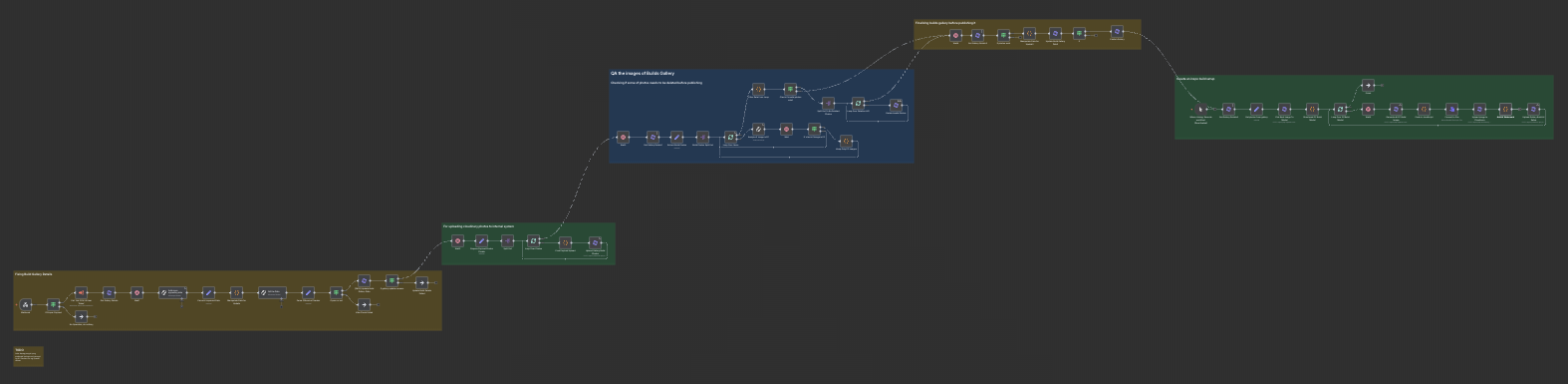
The full workflow handles gallery intake, metadata cleanup, content QA, image validation, generated setup visuals, asset upload, and publishing steps.
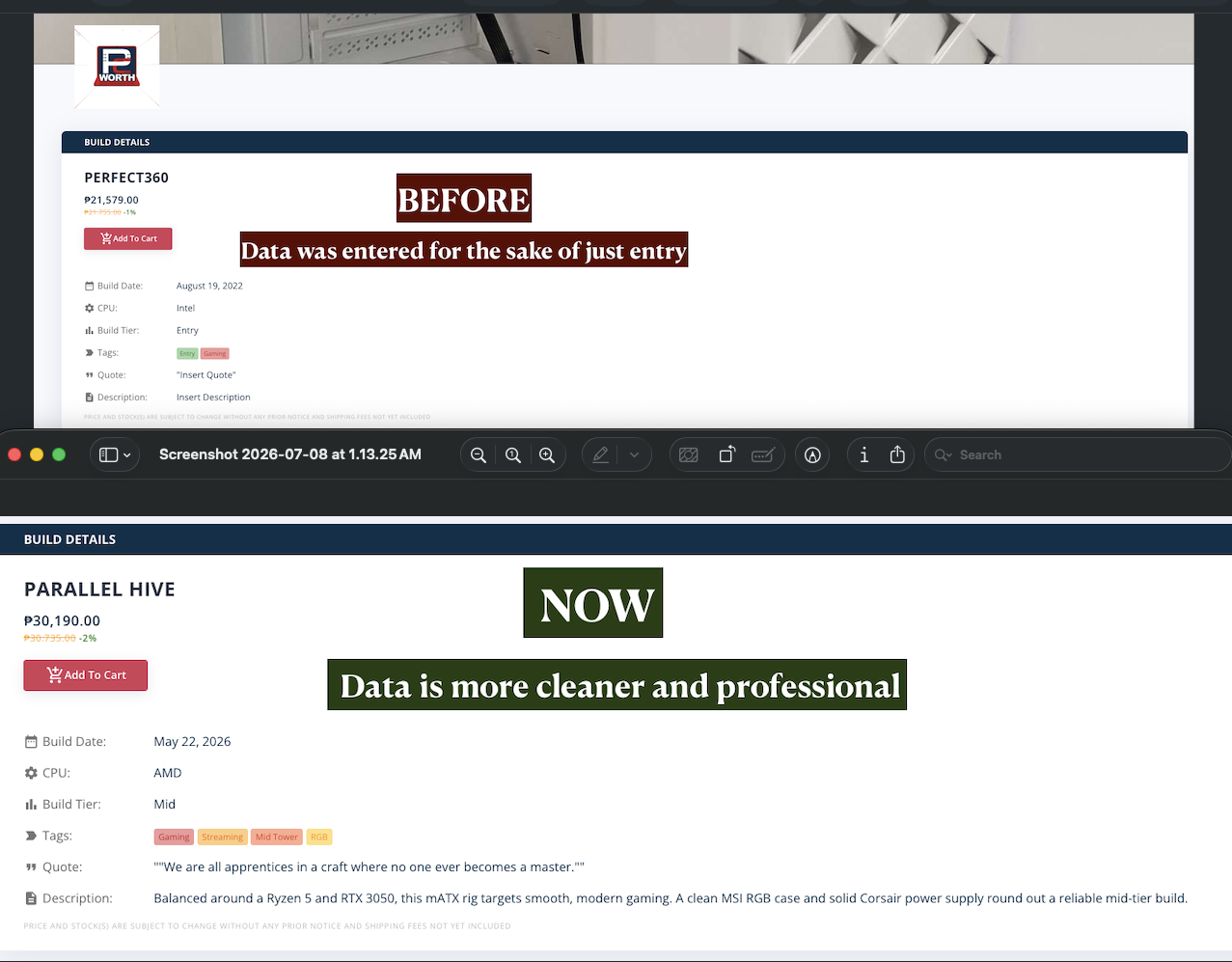
Raw placeholder content was turned into cleaner titles, tags, tiering, quotes, and descriptions that look more professional on the public website.
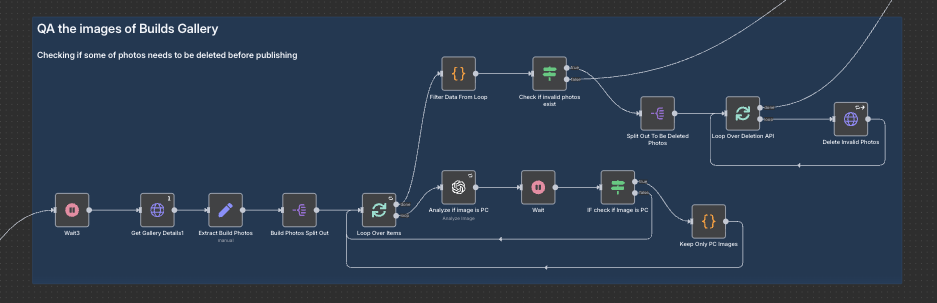
The automation reviews uploaded photos, keeps relevant PC build images, and separates invalid photos before they reach the gallery publishing path.
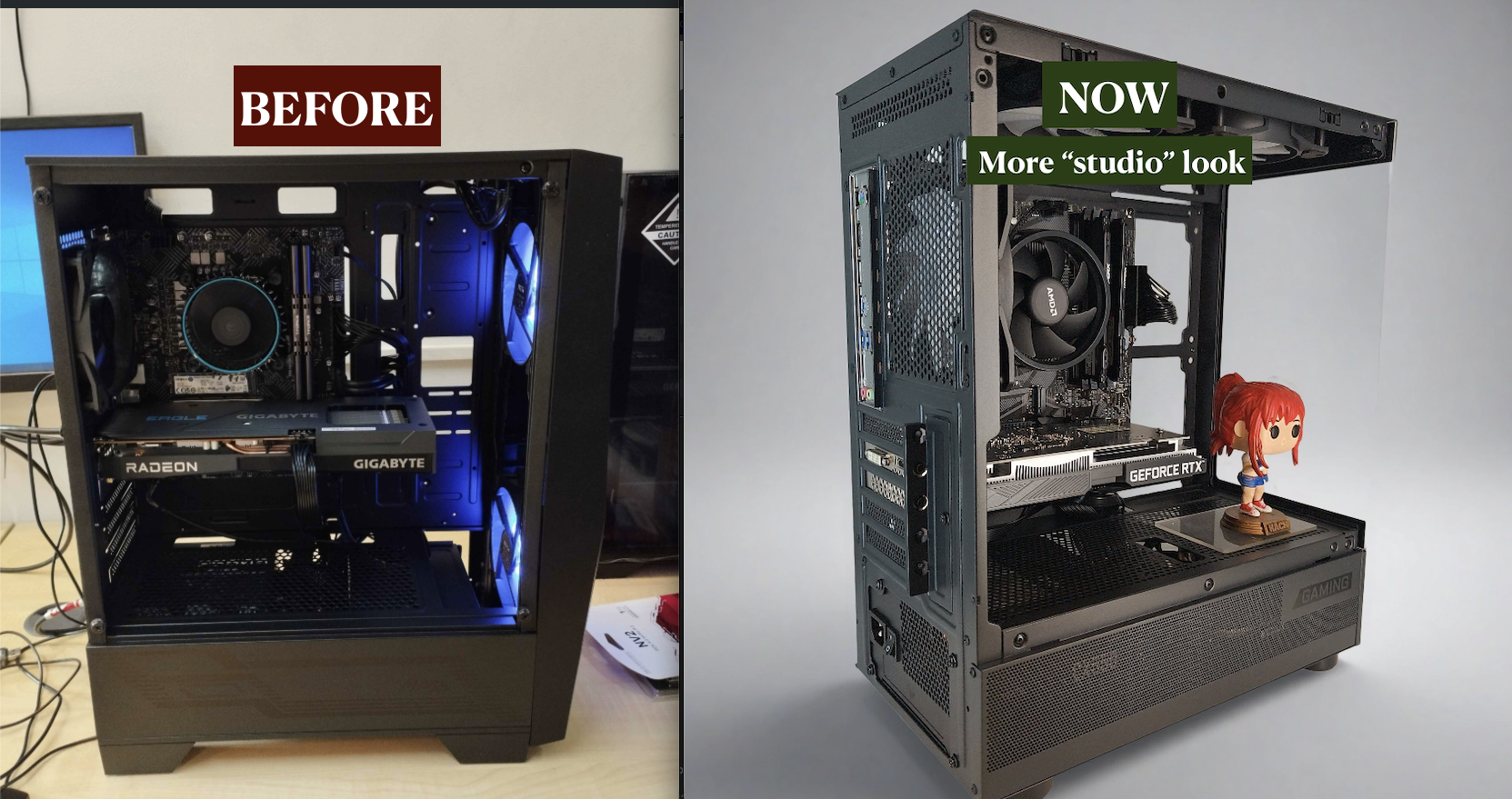
The system can use a real uploaded build photo to create a more polished setup-style visual, helping the gallery look stronger with less manual image work.
Why this matters
The solution turned a repetitive publishing process into a cleaner workflow that helps the business showcase more builds with less manual effort, stronger QA, and better visual presentation.
Book a free discovery call and we will identify whether automation can reduce repetitive work in your business.
Book My Free Discovery Call